
 Android application development
  IOS Application Development
 Cross-Platform App Development
 Custom Application Development
 Enterprise Application Development
 Web Application Development
 Frontend Development
 Backend Development
 Full-Stack Development
 Java App Development
 Custom Software Development
 SaaS Application Development
 ERP & CRM Development
 Cloud-Based Application Development
 API Development & Integration
 On Demand UI/UX Designer
 Mobile App UI Design
 Website UI/UX Design
 Wireframing & Prototyping
 User Research & Usability Testing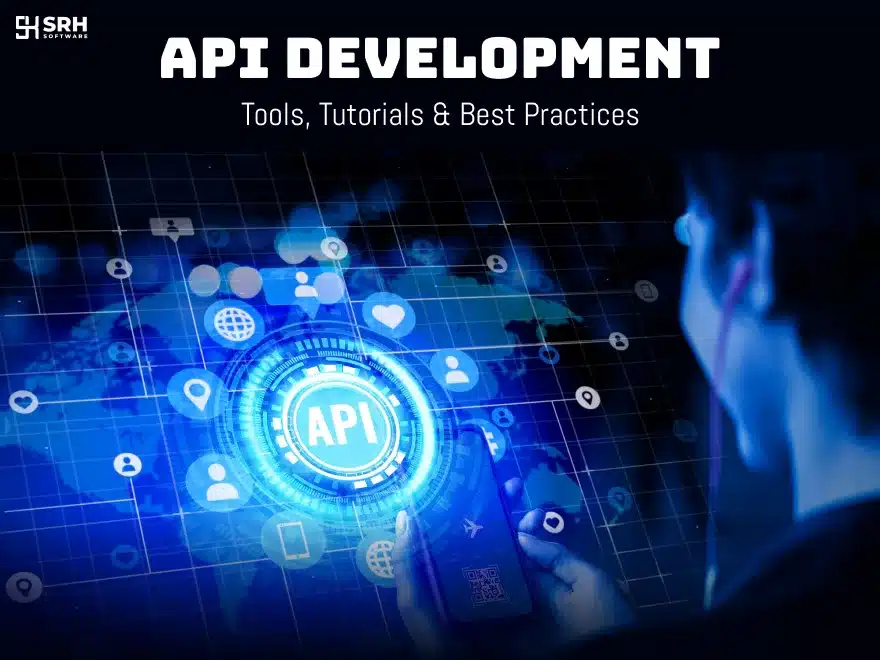
API Development – APIs are being used by 90% of developers in one form or the other. API development helps achieve modularity, reusability, and innovation, encouraging businesses to create robust ecosystems around their products and services. APIs are widely used across businesses because they are the main enabler of communication and interaction between applications.
Given that APIs are increasingly a part of contemporary software development, it is critical to know the entire process of API development to create proper and highly efficient interfaces. In this blog, we will walk you through the key stages of API development, from planning and design to deployment and maintenance, with a focus on tools, tutorials, and best practices.
Types of APIs

1. Web APIs
Often known as REST APIs, Web APIs provide communication between web-based services and applications by using HTTP protocols.
2. SOAP APIs
Often used in business settings, these protocols use XML-based communications to facilitate communication across various systems and applications.
3. GraphQL APIs
Provide a specification and query language for creating APIs that, in contrast to conventional REST APIs, offer quick and flexible data retrieval and manipulation.
4. Streaming APIs
Provide event-driven communication and real-time data streaming, perfect for apps that need to receive changes or notifications instantly.
5. Partner APIs
Enable data sharing and integration between various businesses or partners, encouraging cooperation and collaborative products or services.
Also Read – Top 10 Best Databases for Web Applications to Use in 2024
Detailed Process of API Development
1. Planning and Design: The Foundation
The journey of API development starts with careful planning and design. This phase sets the stage for creating an API that is both functional and user-friendly.
Define API Requirements
The first step is to define the purpose of API Development. Determine what functionality it needs to provide and who the target users will be. Think of primary and secondary functionalities, as well as how your API will be utilized—by corporate applications, other developers, or public users.
Design Tools
There are multiple tools that can help in the design of your API:
- Swagger/OpenAPI – It is one of the most robust frameworks used to design as well as document RESTful APIs. It enables you to create precise and easy machine-readable specifications, which generates interactive documentation as well.
- Postman – Initially known for API testing, Postman also offers robust API design features. It makes it possible to define the endpoint, request parameters as well as responses providing a comprehensive view of your API structure.
2. API Development: Building the API
With a design in place, the next step is development. This phase involves writing the code that will bring your API to life.
API Development Technology Stack
- Programming Languages – Some of the most commonly used languages in API development include Java (Spring Boot, Jakarta EE), C#, Python, PHP (Laravel, Symfony) JavaScript (node.js), and Ruby (Ruby on Rails).
- Frameworks – Express (Node.js), Flask (Python), Spring Boot (Java), and ASP.NET Core (C#) are the frameworks that if used can expedite development by providing pre-built functionalities and structures.
API Development Tools
- IDE/Text Editors: IntelliJ IDEA, Visual Studio Code, PyCharm, and Sublime Text can help with coding.
- API Frameworks: Flask for Python or Express for Node.js can simplify API Development.
- Database Integration: Depending on the data need, either choose NoSQL-based databases like MongoDB or Redis or SQL-based databases like PostgreSQL or MySQL.
3. Testing to Ensure Quality
The most important phase of API development is testing, which ensures that the API is working as planned and meets all requirements. The tools used during API testing are:
- Postman: For functional, integration, and design testing. One can create test scripts and automate test execution with Postman.
- Swagger UI: Test API endpoints directly from the documentation with Swagger UI.
- JUnit: Perfect for Java-based API unit testing.
- Pytest: It is a popular option for testing Python-based APIs.
4. Documentation: For Making APIs Usable
It is crucial to make your API user-friendly and accessible to developers. To achieve this, documentation is essential. The following tools can be taken into consideration for creating API documentation:
- Swagger/OpenAPI: Generates user-friendly, interactive documentation automatically.
- Redox: Provides a user-friendly, customizable documentation experience.
- Readme: An application that builds comprehensive documentation by integrating with APIs.
Also Read – Decoding Mobile App & Web Development Timeframes
5. Deployment: Getting Your API Live
API Deployment is the next and final stage after development and testing. Managing the operation of your API and making it accessible to users are the tasks involved in this phase. The following platforms and technologies are suitable for implementing APIs:
- Containers: A lot of programs, including APIs, are containerized using Docker.
- Orchestration: Kubernetes aids in scaling and managing applications that are containerized.
- Cloud platforms: There are several services available for installing and scaling APIs on AWS (Elastic Beanstalk, Lambda), Azure (App Service, Functions), and Google Cloud (App Engine, Cloud Run).
6. Monitoring and Maintenance: To Keep APIs Running Smoothly
Once your API is deployed, it is imperative to monitor and maintain its functionality. The API can be monitored for optimal reliability and performance with the following tools:
Monitoring Tools
- Prometheus: For metrics-based monitoring and alerting.
- Grafana: Offers logs and metrics visualization.
- Datadog: Provides extensive analytics and monitoring features.
Maintenance Best Practices
- Update and patch your API regularly to fix security flaws.
- To find and fix problems and monitor API performance and error rates.
- To guarantee a seamless transition for users, support deprecated versions.
Principles of Designing APIs
- Clarity and Simplicity: Steer clear of superfluous complications and maintain terminal focus.
- Consistent Naming: Make sure your naming standards are precise, illustrative, and consistent.
- Thorough Documentation: Give each endpoint comprehensive, understandable documentation.
- Security: Enable data encryption, authentication, and authorization for robust security.
- Effective Data Handling: To improve performance, use pagination, filtering, and sorting.
- Concise and Meaningful Error Messages: Send out concise and educational error messages.
- Versioning APIs: Use versioning to handle updates without causing problems for current customers.
- Modular Design: Encourage reuse and steer clear of duplication via modular design (DRY principle).
- Extensible Design: Make sure the API is extensible so it may change to accommodate new features and demands in the future.
- Performance Monitoring: Keep an eye on the error rates and overall performance of the API.
- Use nouns: Typically, developers use verbs in the API URLs, forgetting that HTTP methods properly explain the APIs.
Conclusion
APIs are a necessity in today’s software development with types such as; Web APIs, SOAP, GraphQL, Streaming, and Partner APIs serving different purposes. Adhere to the best API development practices: clarity, consistency, security, and performance. This guide is an invaluable resource for anybody looking to leverage the power of APIs. It will help in realizing the full potential of APIs and driving digital transformation in the connected world of today.